
Targeted Pre-Treatment for Aluminium
Corrosion Protection and Reliable Adhesion for Aluminium Components
Thin Protective Layer, Strong Foundation
The properties of aluminium surfaces can be specifically improved with a chromium(VI)-free conversion coating. In this process, the non-uniform natural oxide film is removed and replaced by a defined thin, resistant layer.
The process of washing, pickling and preserving is suitable for semi-finished and finished parts. It improves corrosion protection and creates a reliable foundation for subsequent welding, painting, bonding or vulcanizing.
The applied layers meet the requirements of the EU End of Life Vehicles Directive.
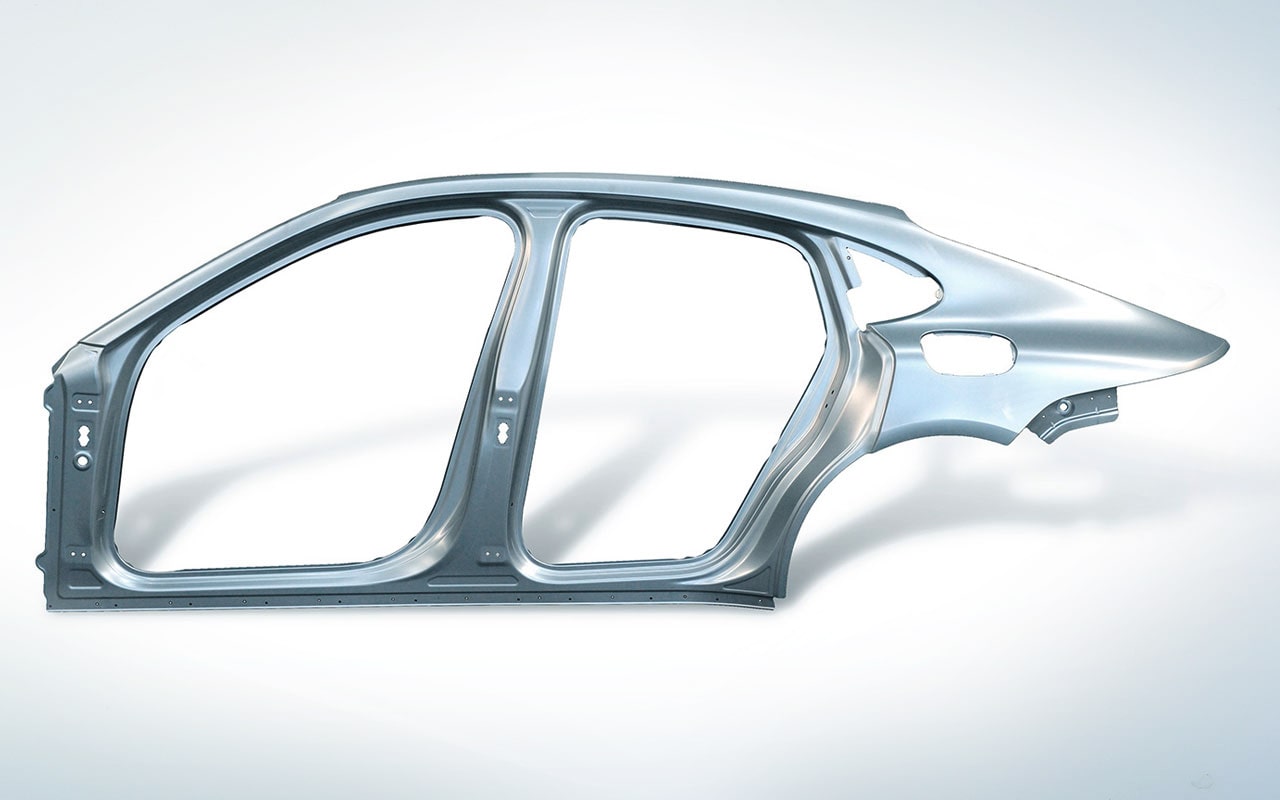
Coating Data and Corrosion Protection at a Glance
Cr(VI)-free
conversion coatings
Titanium- or chromium(III)-based systems for aluminium.
2–15 mg/m²
coating weight
Titanium-based conversion layer with Alodine 2040 or Bonderite M-NT 2040.
50–400 nm
layer thickness
Chromium(III) conversion layer with SurTec 650.
up to 720 h
corrosion protection
In the salt spray test according to DIN EN ISO 9227, depending on the aluminium alloy.
Advantages of Aluminium Passivation
- Improved corrosion protection
- Excellent adhesion primer for paints and varnishes
- Inhibits the formation of the natural oxide layer
- Suitable as a basis for welding, painting, bonding and vulcanizing
- Chromium(VI)-free and environmentally friendly process
- Suitable for semi-finished and finished aluminium parts
More information about Passivation
Process steps:
- Washing and pickling the aluminium surface
- Removing the non-uniform natural oxide film
- Applying a defined thin, resistant conversion coating
Suitable components:
- Semi-finished and finished aluminium parts
- Wrought aluminium alloys
- Cast and forged parts
Subsequent processes:
- Welding
- Painting
- Bonding
- Vulcanizing
Environment and compliance:
- Chromium(VI)-free conversion coatings
- Designed for European environmental directives
- Meets the requirements of the EU End of Life Vehicles Directive
Ti Conversion Layer (Alodine 2040 / Bonderite M-NT 2040)
- Chromium(VI)-free
- Coating weight: 2–15 mg/m²
- Storage protection up to three months
- Improved weldability and adhesion of adhesives and paints
- Temperature-insensitive
- Surface resistance: < 20 µOhm/cm²
- For wrought aluminium alloys as well as cast and forged parts
Chromium(III) Conversion Layer (SurTec 650)
- Chromium(VI)-free
- Layer thickness: 50–400 nm
- Up to 720 hours in the salt spray test according to DIN EN ISO 9227, depending on the alloy
- Slightly iridescent, visible layer
- Heat-resistant up to 100°C
- Surface resistance: < 0.8 mOhm/cm²
- For wrought aluminium alloys as well as cast and forged parts
What does passivation of aluminium mean?
In passivation, the non-uniform natural oxide film on the aluminium surface is removed and replaced with a defined thin, resistant conversion coating. This specifically improves corrosion protection and further processing.
What advantages does aluminium passivation offer?
The conversion coating improves corrosion protection, inhibits the renewed formation of the natural oxide layer, and creates a reliable adhesion base for paints, varnishes, and further follow-up processes.
Is aluminium passivation chromium(VI)-free?
Yes. The titanium-based and chromium(III)-based conversion coatings used at Holder are chromium(VI)-free and designed to meet the requirements of current European environmental directives.
Which aluminium components can be passivated?
The process is suitable for semi-finished and finished aluminium parts, including wrought aluminium alloys as well as cast and forged parts.
Which follow-up processes is the conversion coating suitable for?
The passivated surface provides an excellent foundation for subsequent welding, painting, bonding, and vulcanizing.
Which passivation systems does Holder offer?
Holder processes titanium-based conversion coatings with Alodine 2040 or Bonderite M-NT 2040, as well as chromium(III) conversion coatings with SurTec 650.
What properties does the titanium-based conversion layer have?
The titanium-based layer is chromium(VI)-free, temperature-insensitive, and improves weldability as well as the adhesion of adhesives and paints. The coating weight is 2 to 15 mg/m²; it provides storage protection for up to three months.
What properties does SurTec 650 offer?
SurTec 650 produces a slightly iridescent, visible chromium(III) conversion layer with a thickness of 50 to 400 nm. Depending on the aluminium alloy, up to 720 hours of corrosion protection are possible in the salt spray test according to DIN EN ISO 9227.
Do the coatings meet automotive industry requirements?
Yes. The conversion coatings meet the requirements of the EU End of Life Vehicles Directive. Holder also works to selected manufacturer standards from Porsche, VW/Audi, Mercedes-Benz, BMW, and Jaguar Land Rover.
To which standards does Holder passivate aluminium?
Selected specifications include Porsche PTL 7555, VW/Audi TL 82428 and TL 82433 A + F, Mercedes-Benz DBL 4952.11, BMW PV 97022, and JLR STJLR.50.5002. Further customer-specific requirements can be coordinated on a project basis.