
Tailoring Properties Precisely to the Component
Precisely Adjusting Strength and Ductility
Controlled Heat for Defined Component Properties
Heat treatment of aluminium structural components is used to precisely adjust mechanical properties such as strength, ductility, and bendability. Age-hardenable aluminium alloys, such as Al-Mg-Si alloys, are particularly well suited.
Controlled temperature profiles, holding times, and cooling strategies produce a defined property profile. The focus is often on the relationship between strength, formability, and residual elongation, so that components respond reproducibly under operational and crash loads.
This makes it possible to combine high energy absorption with lightweight construction – through optimized base materials and heat treatment precisely tailored to the component and application.
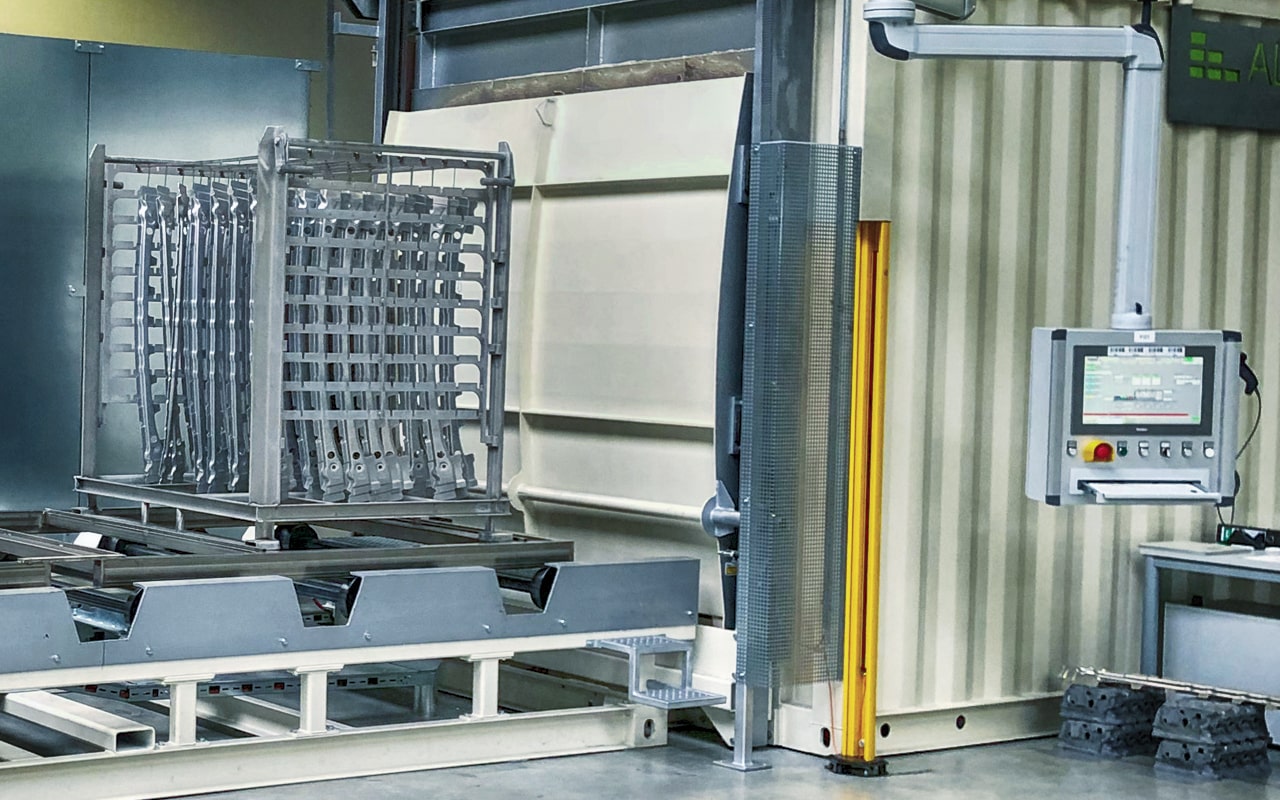
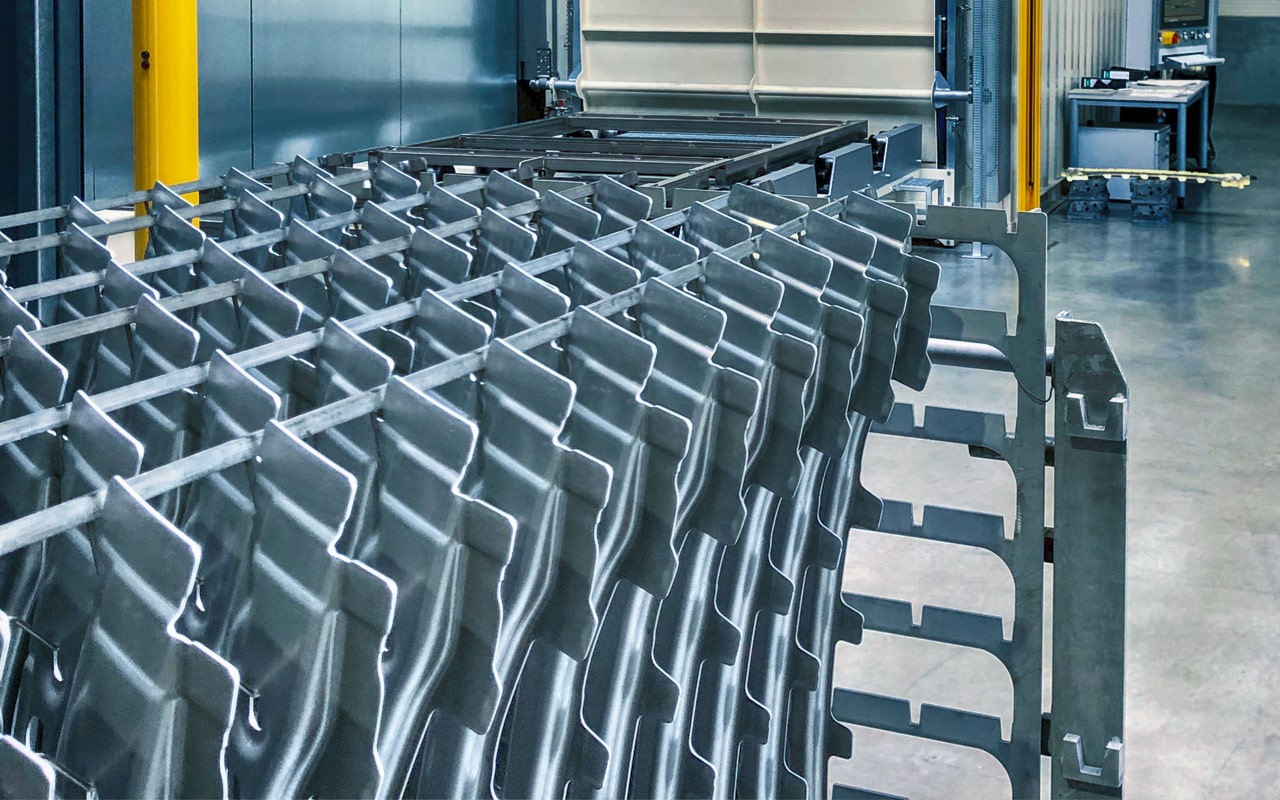
Materials, Process Control, and Component Properties
Al-Mg-Si
particularly suitable alloys
Age-hardenable aluminium alloys for precisely adjustable properties.
Time + Temperature
defined process control
Complemented by coordinated holding times and cooling strategies.
Strong + Ductile
tailored property profile
Precisely adjust strength, formability and residual elongation.
Locally adjustable
Tailor Heat Treatment
Combine formable and high-strength zones within a single component.
Advantages of Aluminium Heat Treatment
- Precisely adjust strength and tensile strength
- Adapt ductility and residual elongation to the application
- Improve bendability
- Enable high energy absorption for crash-relevant components
- Combine lightweight construction and crash performance
- Reproducible component behavior under operational loads
- Locally influence properties when required
- Take long-term strength, corrosion behavior, conductivity and machinability into account
More information about Heat Treatment
Suitable materials:
- Age-hardenable aluminium alloys
- In particular Al-Mg-Si alloys
- Aluminium structural castings and other crash-relevant aluminium components
Target properties:
- Strength and tensile strength
- Ductility and residual elongation
- Bendability
- Energy absorption under crash loads
Process parameters:
- Defined temperature profiles
- Coordinated holding times
- Component- and alloy-specific cooling strategies
- Reproducible process control for the required property profile
Further influenceable properties:
- Long-term strength
- Corrosion behavior
- Electrical conductivity
- Machinability
Local property control:
A tailored short-term heat treatment („Tailor Heat Treatment“) can specifically influence different zones of a component: more formable areas can be combined with zones of high strength.
Typical applications:
- Body structures
- Bumper and crash management systems
- Chassis subframes
- Powertrain mounts
- Other crash-relevant structural components with high energy absorption capacity
Design objective:
Heat treatment supports lightweight construction that absorbs defined loads, controls energy dissipation, and carries as little mass as possible.
Why are aluminium components heat-treated?
Controlled time and temperature profiles allow the mechanical properties of aluminium components to be precisely adjusted. The focus is often on strength, ductility, bendability, and reproducible behavior under operational and crash loads.
Which aluminium alloys are suitable for heat treatment?
Age-hardenable aluminium alloys, such as Al-Mg-Si alloys, are particularly well suited. The specific process control must be tailored to the alloy, component geometry, and the desired property profile.
Which properties can be specifically influenced?
Strength, tensile strength, ductility, residual elongation, and bendability can be specifically adjusted. In addition, heat treatment can influence long-term strength, corrosion behavior, electrical conductivity, and machinability.
Why is heat treatment important for automotive lightweight construction?
In lightweight construction, low mass, high strength, and sufficient formability must work together. Tailored heat treatment helps components absorb defined loads and dissipate energy in a controlled manner under crash loads.
Which components are typically heat-treated?
Typical applications include body structures, bumper and crash management systems, chassis and powertrain mounts, as well as other crash-relevant aluminium structural components.
How is the heat treatment process configured?
The process is parameterized using defined temperature profiles, holding times, and cooling strategies. The values depend on the alloy, component geometry, and the required mechanical properties.
What does Tailor Heat Treatment mean?
Tailor Heat Treatment refers to a customized, often short-term heat treatment that allows properties to be precisely adapted to the requirements of a component.
Can component properties be influenced locally?
Yes. A locally adapted heat treatment can make certain zones more formable, while other areas achieve higher strength.
How does heat treatment improve crash performance?
Through the precisely tailored relationship between strength, ductility, and residual elongation, aluminium structural components can respond reproducibly under load, absorbing and controllably dissipating energy.
Is heat treatment individually tailored to the component?
Yes. Alloy, wall thickness, geometry, required properties, and subsequent processing steps determine the appropriate process control. The parameters are therefore defined on a project-specific basis.