
Electrochemical Aluminium Treatment
Resilient Surfaces for Aluminium Components
Anodizing and Hard-Anodizing Compared
Anodizing (electrolytic anodic oxidation) is an electrochemical process that converts the surface of aluminium into aluminium oxide. The resulting oxide layer is firmly bonded to the base material and protects against tribological and chemical influences.
Hard-anodizing likewise uses anodic oxidation, but in special electrolytes. A hard, ceramic aluminium oxide layer forms on the workpiece surface for high wear and corrosion protection.
Which process is suitable depends on the alloy, component geometry, and the required surface properties.
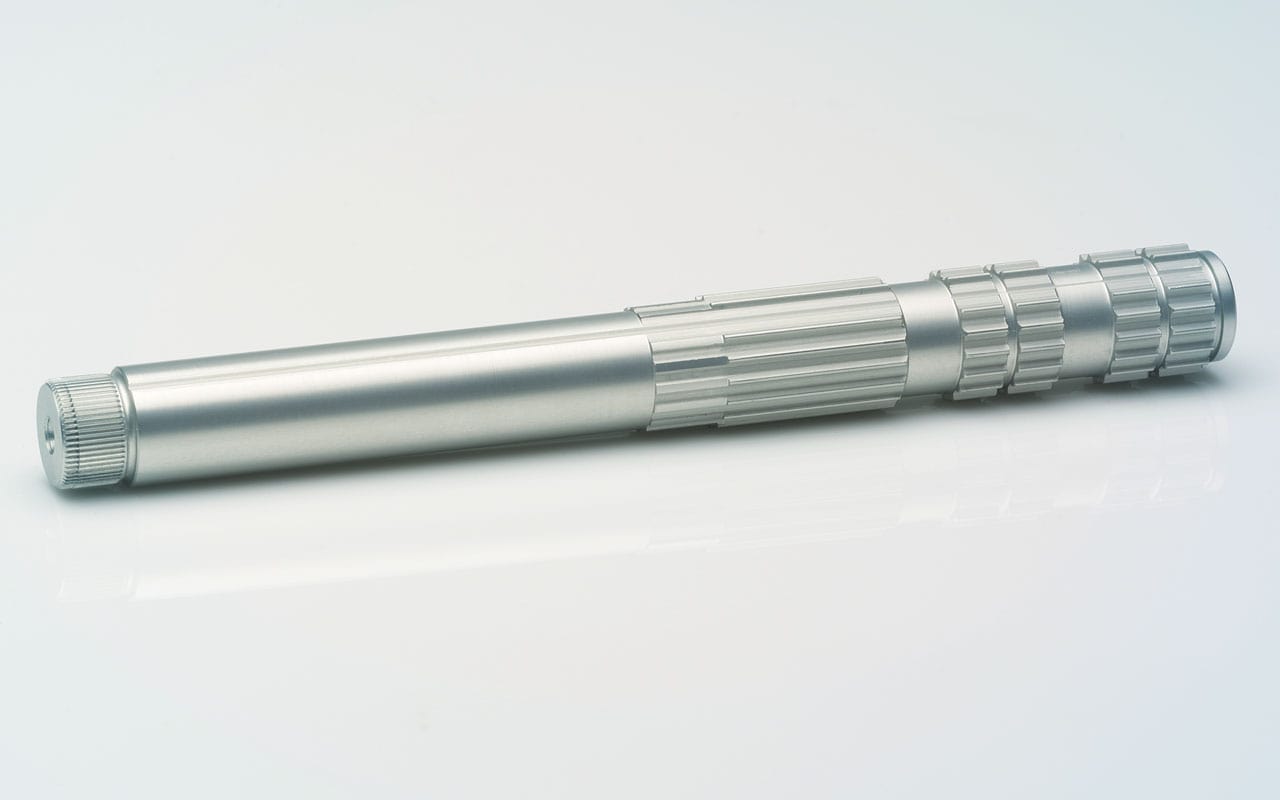
Layer Thickness, Hardness and Component Size at a Glance
5–100 µm
layer thickness
Measured on reference plates; depends on process, alloy and component.
450–500 HV
layer hardness
HV (0.025), alloy-dependent and measured on reference plates.
1,300 × 1,000 mm
maximum component size
Length × width according to technical data.
Selective
coating possible
Technically feasible for large-scale production as well.
Advantages of Anodizing and Hard-Anodizing
- Anodizing: protection against tribological and chemical influences
- Hard-anodizing: high wear and corrosion protection
- Oxide layer firmly bonded to the aluminium
- Significantly increased hardness and wear resistance
- Properties can be specifically controlled via process parameters
- Selective coatings possible even in large-scale production
- Further optimization through suitable post-treatments
More information about Anodizing / Hard-Anodizing
Anodizing:
- Electrolytic anodic oxidation of aluminium
- Conversion of the workpiece surface into aluminium oxide
- Oxide layer firmly bonded to the base material
- Protection against tribological and chemical influences
Hard-Anodizing:
- Anodic oxidation in special electrolytes
- Hard, ceramic aluminium oxide layer
- High protection against wear and corrosion
- Alloy-dependent coating properties
Shared technical data:
- Component dimensions: from a few millimeters up to 1,300 mm length and 1,000 mm width
- Layer thickness: 5–100 µm, measured on reference plates
- Layer hardness: 450–500 HV (0.025), alloy-dependent and measured on reference plates
- A contact point for current transfer and fixation is required
Process design:
- Properties can be controlled via electrolytes, temperatures and modulated current densities
- Selective coatings possible even in large-scale production
- Coatability depends on the alloy and its components
- Hot sealing as an optional post-treatment
Product systems:
- Novatec 810
- Novatec 850
- Novatec 850 GL
Post-treatment:
The tribological and chemical properties of anodized surfaces can be further enhanced through suitable post-treatments. Hot sealing is optionally available.
What is anodizing?
Anodizing is the electrolytic anodic oxidation of aluminium. In this process, the workpiece surface is converted into aluminium oxide, forming an oxide layer firmly bonded to the base material.
What is hard-anodizing?
Hard-anodizing produces a particularly hard, ceramic aluminium oxide layer through anodic oxidation in special electrolytes. It protects the component against wear and corrosion.
What is the difference between anodizing and hard-anodizing?
Both processes produce anodic aluminium oxide layers. Anodizing primarily protects against tribological and chemical influences. Hard-anodizing is designed to produce a particularly hard and wear-resistant functional layer.
What advantages do anodically produced oxide layers offer?
Electrolytic anodic oxidation increases the hardness, corrosion resistance, and wear resistance of the aluminium surface. The layer is firmly bonded to the base material.
What layer thicknesses are possible at Holder?
The technical process data specify layer thicknesses of 5 to 100 µm, measured on reference plates. The specific value depends on the process, aluminium alloy, and component geometry.
What hardness do anodized and hard-anodized layers achieve?
On reference plates, alloy-dependent layer hardness values of 450 to 500 HV (0.025) are specified.
What component sizes can be anodized?
Components ranging from a few millimeters up to 1,300 mm length and 1,000 mm width can be processed.
Can aluminium components be selectively anodized?
Yes. Selective coatings are technically feasible even in large-scale production. However, a defined contact point on the component is required for current transfer and fixation.
Which aluminium alloys are suitable for anodizing and hard-anodizing?
Many aluminium alloys can be anodized. However, the specific coatability and achievable layer properties depend on the respective alloy components and must be verified on a component-specific basis.
What products and post-treatments are available?
Holder uses the product systems Novatec 810, Novatec 850, and Novatec 850 GL. Suitable post-treatments, including optional hot sealing, can further influence the tribological and chemical properties.